

This blog post was written by our Museum Attendant, Sarah.
The Cock Lane ghost affair is one of those useful historical events that ticks a number of boxes, including skulduggery, immorality, paranormal activity and public hysteria, and, as an added bonus includes the participation of Lichfield’s favourite lexicographer, Dr Samuel Johnson.

The case hit the headlines in 1761 -2 when the spirit of a dead woman (Fanny Lynes), speaking through a child (Elizabeth Parsons), accused her “husband” (William Kent) of murdering her, but to understand the full complexity of the issue we have to investigate the back story of the characters involved.
Fanny Lynes was the sister of William Kent’s first wife, Elizabeth (two different Elizabeths, which is confusing, but can’t be helped!), who had died shortly after bearing their first child. Fanny came to help look after the child, who also soon died, and Fanny and William fell in love. According to canon, or church, law which governed marriage at the time, a man was not allowed to marry his dead wife’s sister (on the grounds that because they were already connected by the previous marriage it would be improper for them then to marry each other) especially if the first wife had had a child. The risk that such a couple ran, even if they found a priest prepared to marry them, was that their marriage was voidable in an ecclesiastic court if any interested party objected (and Fanny’s relations were not keen on William) which would then make any of their children illegitimate. Illegitimacy was a bar to inheritance. This law was not repealed until the Deceased Wife’s Sister’s Marriage Act 1907.
Fanny loved William and persuaded him that they should move to London where they would have a better chance of being able to live together undetected as man and wife. They appeared to be a respectable couple (which of course according to the much stricter standards of the 18th century they were not) and found lodgings with Richard Parsons, a parish clerk, in Cock Lane, near Smithfield Market and St Paul’s Cathedral. Richard, who also appeared to be respectable, was known locally as a drunk and had money problems. When William was away on business, he asked Elizabeth Parsons, Richard’s eldest daughter, about 11 years old, to sleep with Fanny, who was pregnant, to keep her company, and both reported ghostly phenomena, including loud knocks and scratching noises. The spirit most likely to be displeased with Fanny was her sister, William’s first wife.
Another factor is that William had lent Richard money, and threatened him with a lawsuit when he failed to repay on time. The relationship between William and Richard became difficult so in January 1760 William and Fanny moved to temporary accommodation nearby while the property at Bartlet’s Court in Clerkenwell where they intended to live was being got ready. Unfortunately, Fanny, who was within weeks of giving birth became ill. Her doctor and apothecary both agreed that she had smallpox. Realising she was likely to die Fanny sent for an attorney to ensure that her will was in order and that William would inherit her estate (her family later tried and failed to contest her will). She died on 2 February 1760.
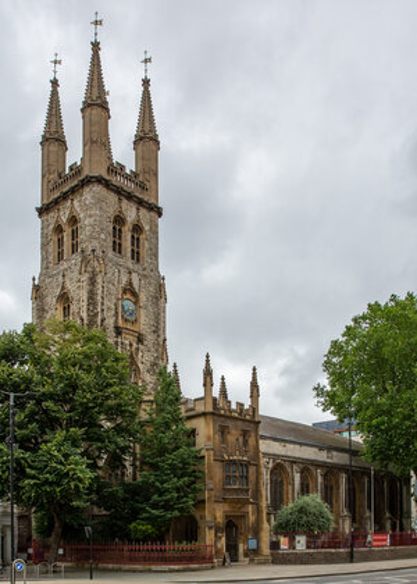
Paranormal manifestations began again in earnest at Cock Lane in 1761. The focus was always Elizabeth, who, besides suffering from fits, was plagued with knocking and scratching noises, supposed to sound like a cat clawing a chair. Richard sought help from John Moore, assistant preacher of the neighbouring church of St Sepulchre’s. Both thought that the troubled spirit disturbing the house was Fanny, and remembered that the house had previously been disturbed by a spirit thought to be of William’s first wife. They worked out a system of communication with the ghost – one knock for yes, two knocks for no – and using this the ghost of Fanny claimed that she’d been murdered by William, and had died not from smallpox but by arsenic poisoning. John Moore had Methodist leanings and felt inclined to trust the reality of the ghost, but to get another opinion he also involved Thomas Broughton, a convinced Methodist, who after visiting Cock Lane also believed in the ghost.
The story spread like wildfire, helped by sensational reporting in the London daily newspaper, the Public Ledger, that accused William of luring Fanny to London, then imprisoning and poisoning her. A few days later the paper revealed that Fanny had returned as a ghost and was giving evidence against her murderer by a series of knocks. This was all very exciting! William was determined to clear his name (after all, the penalty for committing murder at this time was death) and himself engaged in a séance with the ghost at Cock Lane in which the ghost confirmed that he would be hanged. Séances were arranged in different locations, and wherever Elizabeth Parsons went the ghost went too. Other London newspapers took up the story – the St James Chronicle, the London Chronicle and Lloyd’s Evening Post (some reports were more sceptical than others!). Prince Edward attended one of the séances and the crowds of people gathered outside the property became so great that it was impossible to move through the street. Richard charged visitors a fee to communicate with the ghost.

From a public order perspective, the situation was getting out of control and Samuel Fludyer, Lord Mayor of London, became involved. Being mindful of other paranormal cases that had proved to be fraudulent he was not prepared either to arrest William on grounds of murder or Richard on grounds of conspiracy. He ordered a properly conducted investigation which was to be carried out at the house of Stephen Aldrich, parish priest of St John Clerkenwell (where Fanny was buried). A number of eminent men were invited to attend, one of whom was Samuel Johnson, whose account of the event can be read in the addendum. The unanimous conclusion of those present on 1 February 1762 was that the “ghost” was a fabrication of Elizabeth.
The affair limped on, with further investigations of Elizabeth which proved that when her hands and feet were visible no knocking or scratching noises were heard. On 25 February Fanny’s coffin in the vault of St John’s Clerkenwell was opened (rumours had spread that the body had been removed, which accounted for the ghost’s failure to knock on her coffin). This proved beyond doubt that Fanny’s corpse was there, and not a pretty sight. John Moore, who was present, immediately and publicly withdrew his support for the ghost, but that wasn’t enough to prevent the authorities charging him, Richard Parsons, his wife and several others with conspiracy. The trial was held at the Guild Hall in London on 10 July. After hearing the evidence, the judge, Lord Chief Justice William Murray, took 90 minutes to sum up, but the jury took only 15 minutes to reach a verdict of guilty for all accused.
After a brief spell in prison in early 1763 (having failed to reach a mutual agreement earlier) John Moore and another of the accused agreed to pay William substantial damages (between £500 – £600) and were dismissed with a severe reprimand. Richard, who throughout maintained his innocence, was sentenced to 2 years imprisonment and to 3 sessions in the pillory – the first time he was set there he appeared to be mad and the crowd who could have turned on him evidently felt sorry instead and raised a subscription on his behalf.
The affair gave rise to many contemporary responses, including an anonymous work titled Anti-Canidia: or, Superstition Detected and Exposed, mocking the credulity of those involved. There was a farcical poem called Cock-lane Humbug and plays including The Drummer and The Haunted House. Oliver Goldsmith may have produced the satirical illustration, English Credulity or the Invisible Ghost and Hogarth made several prints, one of which, Credulity, Superstition and Fanaticism, shows a Methodist minister slipping a phallic “ghost” into a young woman’s bodice.

It’s doubtful that the fact that the Cock Lane ghost proved to be a fraud had much effect on the public’s interest in and enthusiasm for the supernatural. For Johnson, a committed Christian, the idea that there might not be an afterlife was a horrible thought, and as he said in conversation with Boswell, “It is wonderful that five thousand years have now elapsed since the creation of the world, and still it is undecided whether or not there has ever been an instance of the spirit of any person appearing after death. All argument is against it, but all belief is for it.”
Addendum
Cock Lane Ghost
On the night of the 1st of February many gentlemen eminent for their rank and character were, by the invitation of the Reverend Mr. Aldrich, of Clerkenwell, assembled at his house, for the examination of the noises supposed to be made by a departed spirit, for the detection of some enormous crime. About ten at night the gentlemen met in the chamber in which the girl, supposed to be disturbed by a spirit, had, with proper caution, been put to bed by several ladies. They sat rather more than an hour, and hearing nothing, went down stairs, when they interrogated the father of the girl, who denied, in the strongest terms, any knowledge or belief of fraud. The supposed spirit had before publickly promised, by an affirmative knock, that it would attend one of the gentlemen into the vault under the Church of St. John, Clerkenwell, where the body is deposited, and give a token of her presence there, by a knock upon her coffin; it was therefore determined to make this trial of the existence or veracity of the supposed spirit. While they were enquiring and deliberating, they were summoned into the girl’s chamber by some ladies who were near her bed, and who had heard knocks and scratches. When the gentlemen entered, the girl declared that she felt the spirit like a mouse upon her back, and was required to hold her hands out of bed. From that time, though the spirit was very solemnly required to manifest its existence by appearance, by impression on the hand or body of any present, by scratches, knocks, or any other agency, no evidence of any preter-natural power was exhibited. The spirit was then very seriously advertised that the person to whom the promise was made of striking the coffin, was then about to visit the vault, and that the performance of the promise was then claimed. The company at one o’clock went into the church, and the gentleman to whom the promise was made, went with another into the vault. The spirit was solemnly required to perform its promise, but nothing more than silence ensued: the person supposed to be accused by the spirit, then went down with several others, but no effect was perceived. Upon their return they examined the girl, but could draw no confession from her. Between two and three she desired and was permitted to go home with her father. It is, therefore, the opinion of the whole assembly, that the child has some art of making or counterfeiting a particular noise, and that there is no agency of any higher cause.
— Samuel Johnson (1762)