
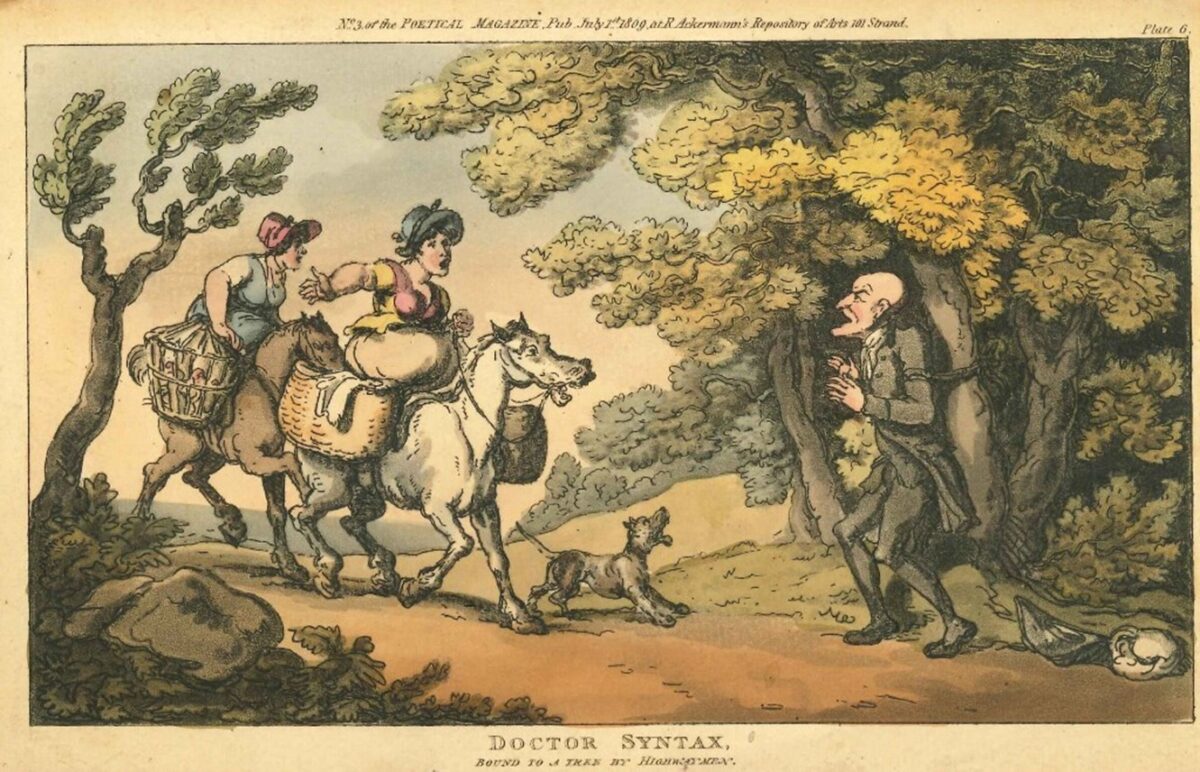
Highwaymen were a serious problem for travellers in the 18th century. Long stretches of remote road had no patrols, and the chance of getting help quickly during a robbery was slim, making it easy for highwaymen to ambush travellers. With travel, commerce, and postal services on the rise, robbers had even more opportunities. Many people turned to this “occupation” as a way to survive widespread poverty.
Yet despite their criminality, highwaymen were often romanticised. Figures such as Dick Turpin captured the public imagination, and being a highwayman became a strangely glamorous “profession.” Some even earned the nickname “gentlemen” highwaymen–robbers who, reportedly, were polite about it!
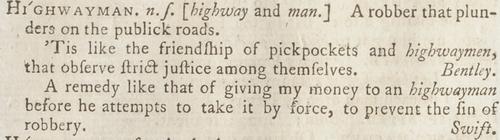
In A Dictionary of the English Language (1755), Samuel Johnson (1709–1784) defined a highwayman as “a robber that plunders on the publick roads.” In this blog post, we’ll explore Johnson and his friends’ views and experiences of highwaymen, and how Lichfield, Johnson’s birthplace, produced a particularly vicious highwayman…

Jack Withers was born in Lichfield, the son of a butcher, and for a time worked for his father. He later travelled to London, where he chose a life of crime. After serving as a soldier in Flanders, he stole money from a church in Ghent and was brought before a cardinal, where he remarkably managed to talk his way out of punishment.
After committing further offences, Jack returned to England and became a highwayman. His crimes escalated, and following the brutal killing of a penny-post man near Uxbridge, his luck finally ran out. About two months later, he was arrested for robbery. At the Lent Assizes in Norfolk, on 16 April 1703—the day of his execution at Thetford—Withers confessed to the murder of the penny-post man [1].
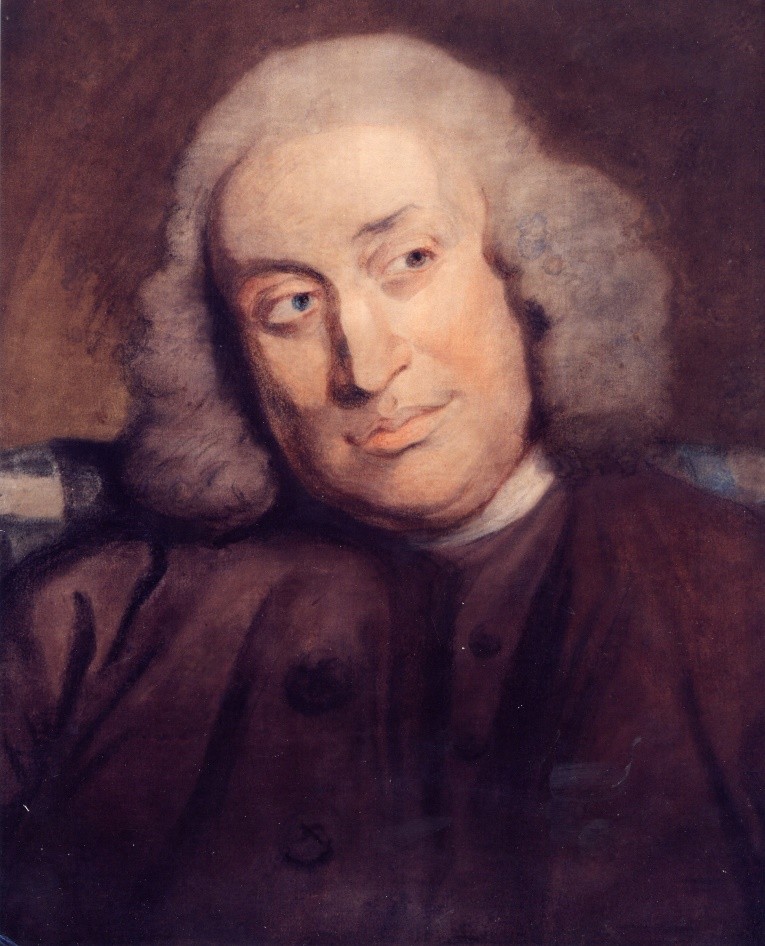
Although Samuel Johnson had no known encounters with highwaymen, he did, as you might expect, have an opinion on the punishments they received. A conversation he had about highwaymen and the idea of immediate self-defence—rather than potentially living with the guilt of mistakenly identifying someone and watching them be executed—was recorded by James Boswell (1740–1795) in The Life of Samuel Johnson (1791). When talking about travelling to Streatham one evening, a friend warned, “You’ll be robbed, if you do; or you must shoot a highwayman. Now, I would rather be robbed than do that; I would not shoot a highwayman.” Johnson exclaimed: “But I would rather shoot him in the instant than when he is attempting to rob me, than afterwards swear against him at the Old Bailey, to take way his life, after he has robbed me. I am surer I am right in the one case, than in the other. I may be mistaken as to the man when I swear; I cannot be mistaken if I shoot him in the act…”. Boswell interjected in the debate and asked Johnson, “So, Sir, you would rather act from the motive of private passion, than that of public advantage.” Johnson replied, “Nay, Sir, when I shoot the highwayman, I act from both … At the same time, one does not know what to say, for perhaps one may, a year after, hang himself from uneasiness for having shot a highwayman.”
Johnson’s own mother feared being robbed during her travels to and from London in 1712, when she took a young Sam to be touched by Queen Anne as a “cure” for his scrofula. Sarah Johnson (1669–1759) sewed their money into her skirts to protect it from highwaymen and other thieves during the journey.
As highwaymen gained notoriety, the wealthy lived in fear of being robbed. James Boswell wrote in his journal about a carriage journey to Oxford in 1763, “I was a little afraid of highwaymen, but we met none.” However, not all of Samuel Johnson’s friends were so lucky. Henry Thrale (1724–1781), the wealthy London brewer and close friend of Johnson, experienced a robbery first-hand. In 1763, Thrale was held up by the highwayman Samuel Beaton while travelling in his coach and was robbed of 13 guineas, his watch, and his silver shoe buckles. On 12 August 1763, Beaton was hanged on Kennington Common for the crime.
James Boswell witnessed the execution of a highwayman and wrote about it in 1768 for The Publick Advertiser: “I shall never forget the last execution I saw at Tyburn, when Mr. Gibson, the attorney, for forgery, and Benjamin Payne, for a highway robbery, were executed. Poor Payne was a thin young lad of twenty, in a mean dress, and a red nightcap, with nothing to discriminate him from the many miserable beings who are penitent and half dead with fear…”

Highwaymen became glamorised and immortalised in songs and stories. Johnson’s friend, the diarist, biographer, and novelist Frances Burney (1752–1840), included a scene in her novel Evelina (1778). In the story, the unsavoury character Captain Mirvan, aided by Sir Clement Willoughby, disguises himself as a highwayman. The two men stage a fake highway robbery against Madame Duval, who believes she is being attacked and is dragged away, left tied up in a ditch.
Highwaymen may have captured the public imagination, but behind the songs and stories were real dangers, fear, and sometimes tragic consequences. From Jack Withers’ brutal crimes to the personal experiences and fears of Samuel Johnson’s friends and family, it’s clear that the threat of robbery on the road was a genuine part of 18th-century life. Yet, despite their violence, highwaymen were immortalised in literature and folklore, leaving a lasting, if contradictory, legacy: feared criminals in reality, but adventurous, heroic figures in memory. Their story reminds us how history can blur the lines between fact and myth, danger and fascination.
Resources:
[1] https://www.exclassics.com/newgate/ng96.htm