
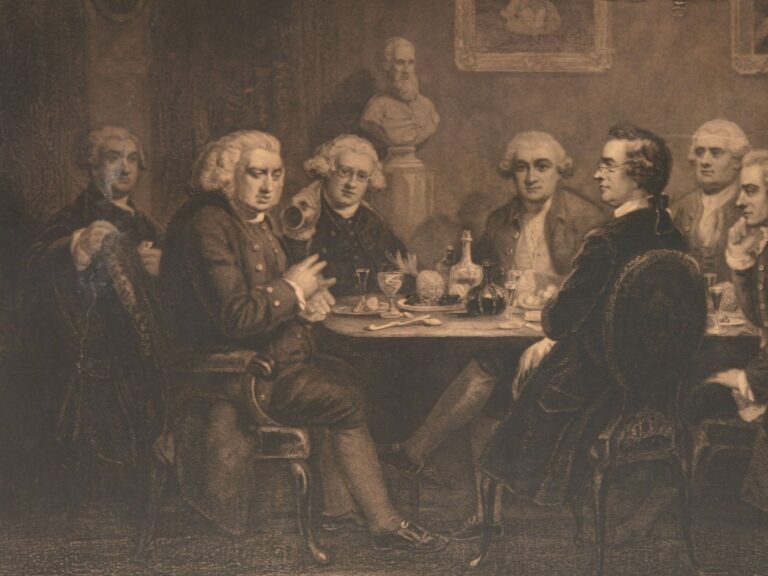
16 July 2023 marks the 300th anniversary of the birth of Joshua Reynolds, one of the most famous painters of his century and great friend of Samuel Johnson.
In honour of the event, this month’s blog post looks at the friendship between the two men through some items in the Museum collection which tell parts of their story.
Samuel Johnson and Joshua Reynolds met in 1754, and a life-long friendship with, in Johnson’s words, “no cause of complaint on either side”, continued until Johnson’s death in 1784. Johnson called Reynolds his “oldest and kindest friend.”

When Reynolds became seriously ill in 1764 Johnson wrote in a letter to him, “If I should lose you, I should lose almost the only Man whom I call a friend.” When Johnson died in 1784, Reynolds was one of his executors.
Meeting
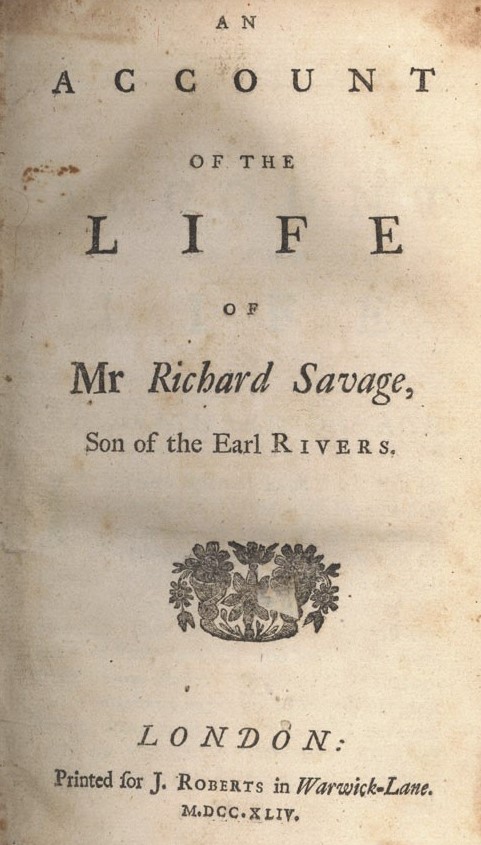
Johnson’s first major biography, The Life of Richard Savage, was published anonymously in 1744 and inspired Joshua Reynolds to want to meet the author. He told James Boswell that the book “seized his attention so strongly that not being able to lay down the book till he had finished it, when he attempted to move, he found his arm totally benumbed.” Reynolds and Johnson eventually met in 1754. Mutual friends with the daughters of Admiral Cotterell, Reynolds happened to visit on a day that Johnson was taking tea.
Painting Johnson

Reynolds painted five portraits of Johnson. The portrait in the National Gallery Collection which visited Lichfield Cathedral in 2019 shows a newly famous man proudly sitting at a desk with quill and paper in c.1756, having just completed his Dictionary. It was painted by Reynolds as a personal tribute to a friend, rather than a commission. Indeed, it hung on the painter’s own wall until it was given to James Boswell who had it engraved as a frontispiece to the Life of Samuel Johnson. Reynolds liked to capture his friend as a thinker with a pile of scrolls in the background. Johnson didn’t always approve of the way Reynolds captured him; his mannerisms of a portrait painted in 1769 suggested to Johnson “a mind preying on itself.”
On a visit back to Lichfield in the 1770s Johnson was flattered that a copy of a Reynolds portrait given to Lucy Porter was being “much admired.”
The Club
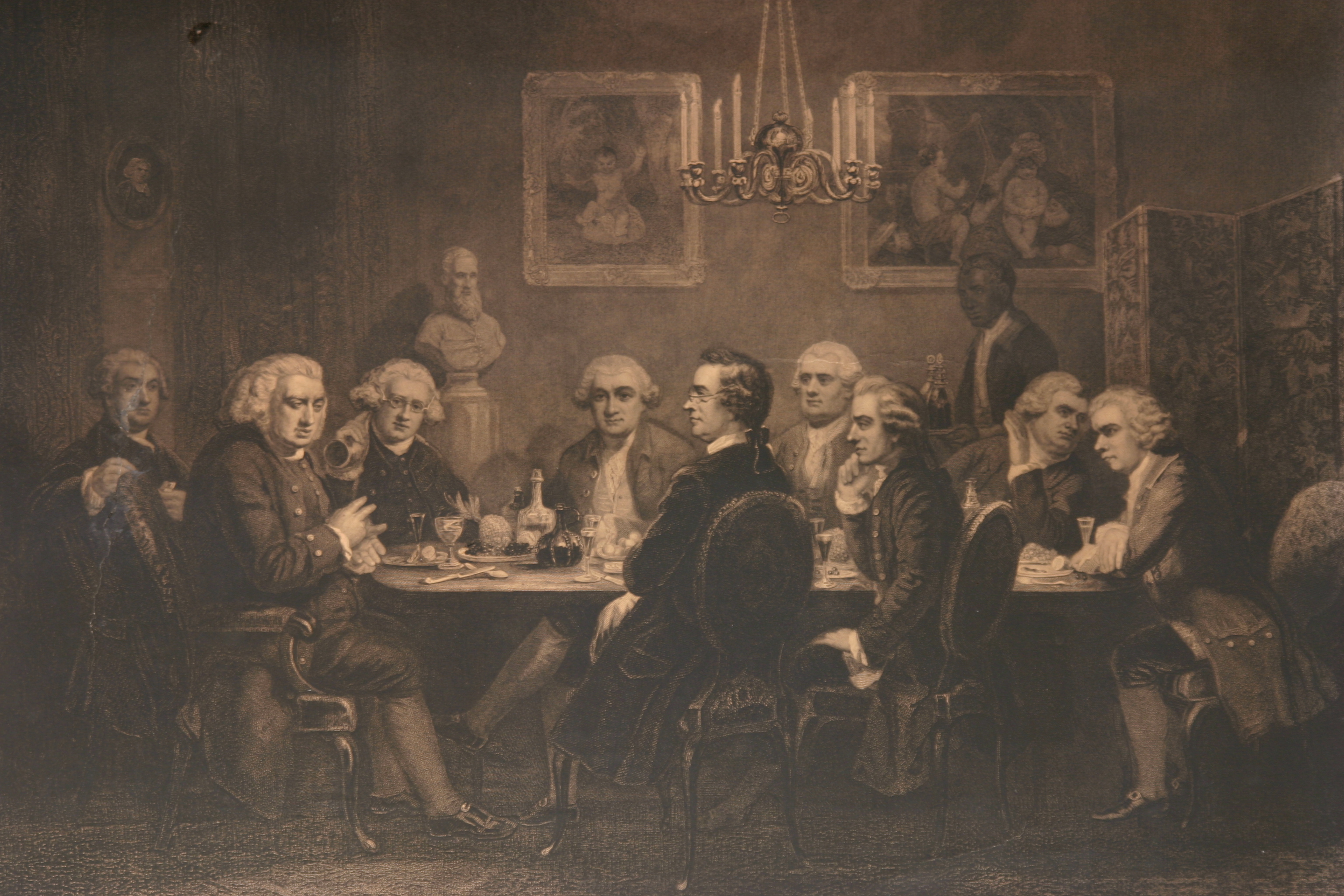
Early in 1764, Joshua Reynolds formed what simply became known as the Club. Reynolds thought that a regular meeting of intelligent conversation with friends would help to combat the loneliness that Johnson so feared, and also be a platform for Johnson to express his ideas amongst his circle.
The Club met once a week over dinner and drinks at the Turks Head Tavern in London. It was decided that a membership of nine would be a good number to keep conversation lively and interesting. Other founder members included Edmund Burke and Oliver Goldsmith.
The Latin motto for the Club was esto perpetua meaning ‘Let it be Perpetual’.
Dedication
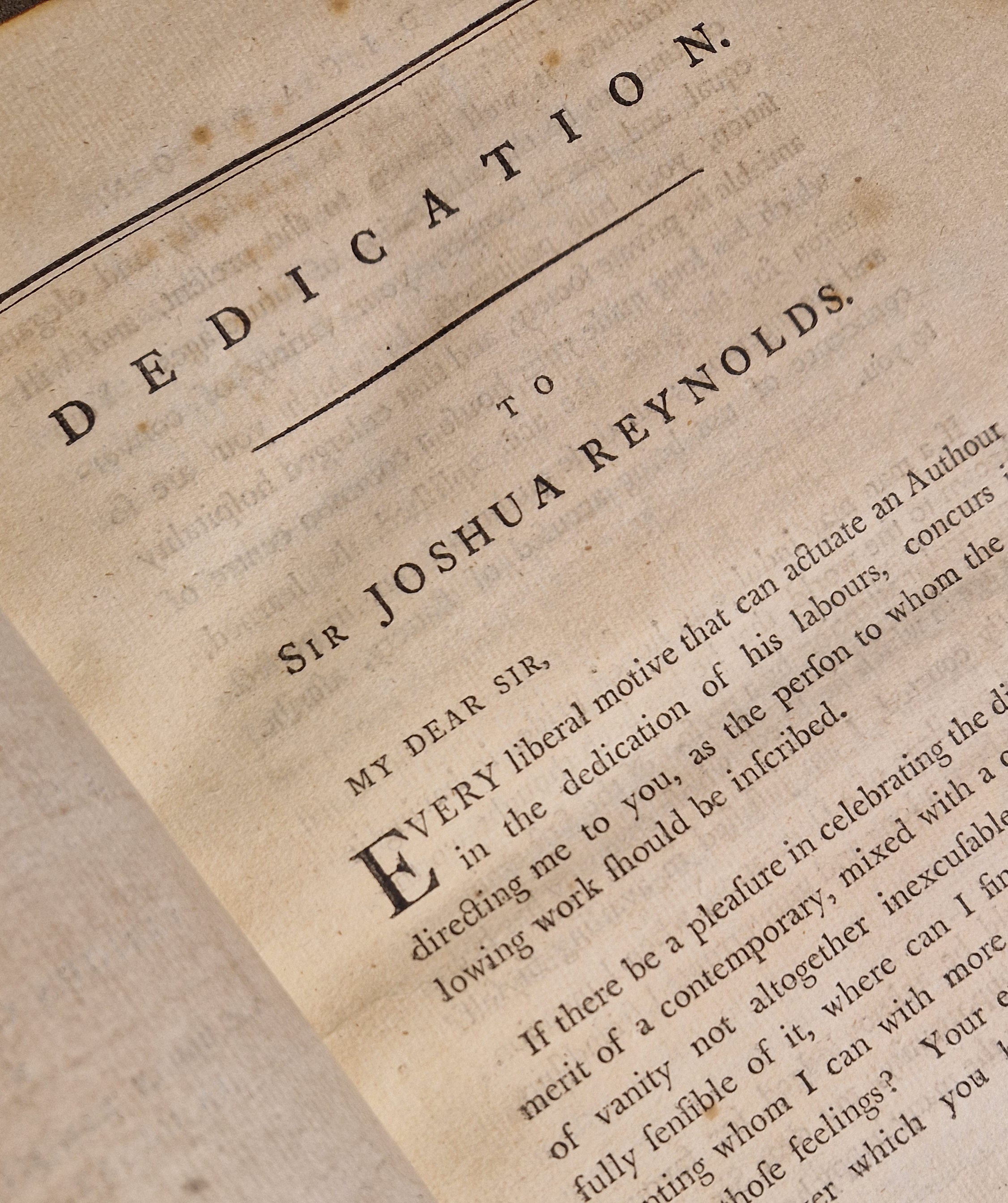
James Boswell dedicated his Life of Johnson to “the master of the subject of it” Joshua Reynolds.
Having painted, studied and become acquainted with him, Boswell believed that Reynolds had the ability to perceive “all the shades which mingled in the grand composition; all the little peculiarities and slight blemishes which marked the literary Colossus”.
The first edition of Boswell’s included the ‘Dictionary’ portrait by Reynolds as the title frontispiece.
Memorial to Johnson

Dated 18th April 1791, Reynolds wrote to thank Thomas Cadell for his contribution of £100 towards a monument in memorial of Samuel Johnson. Soon after Johnson’s death, Reynolds set about raising funds. The monument by John Bacon was to be erected in Westminster Abbey, the site of Johnson’s burial, but Reynolds preferred St Pauls Cathedral where it was unveiled in 1796.
Contributor: with many thanks to Museum volunteer Nicola Young. This blog post was taken from the text of her 2019 display at the Birthplace Museum “Every man has a lurking wish to appear considerable in his native place”, organised to mark the National Gallery Portrait of Johnson on display at Lichfield Cathedral.